
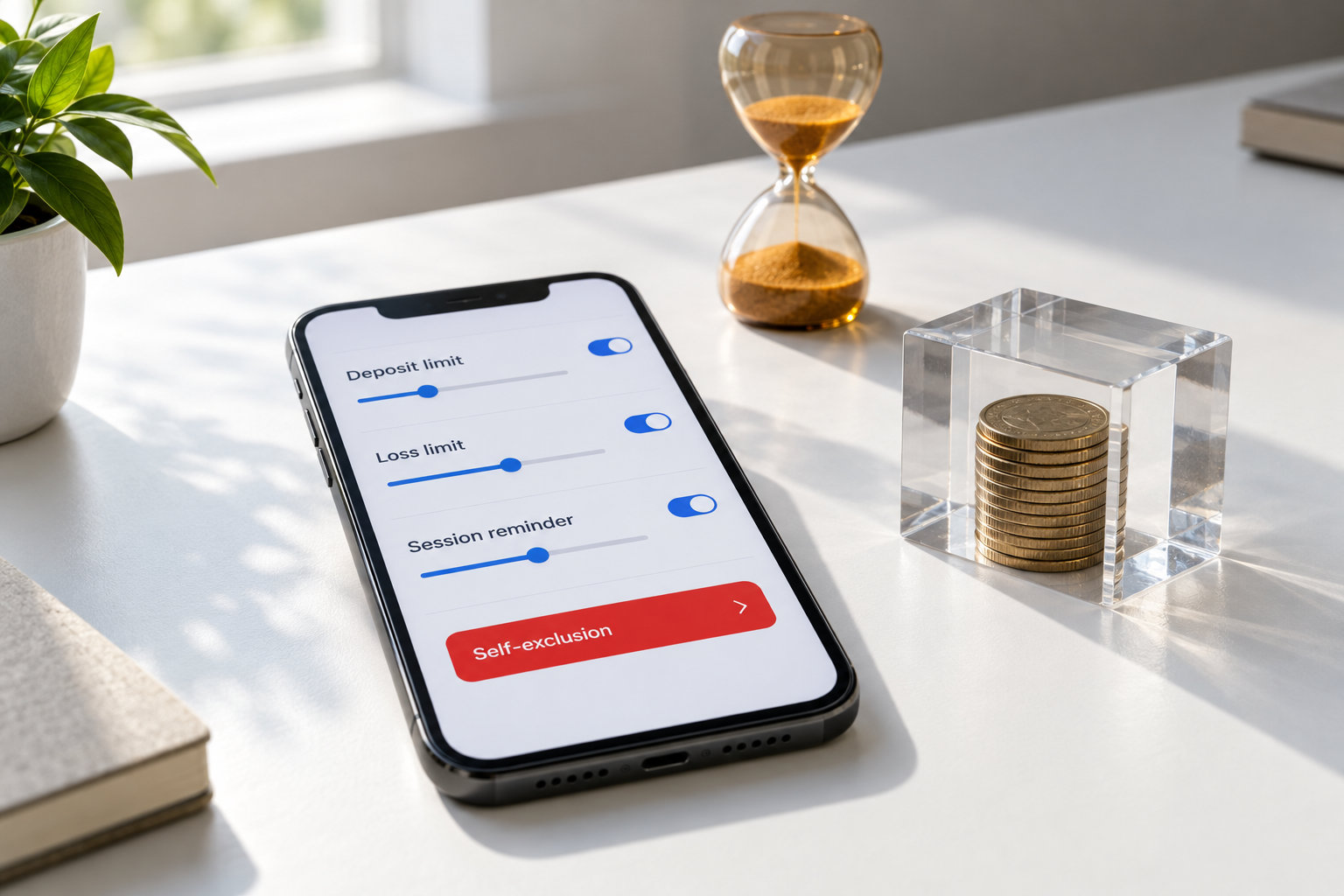
Modern betting sites now equip you with a range of responsible gaming tools designed to create safer and more transparent play. These features help you manage activity from the first deposit through every wager, supporting healthy habits within today’s fast-moving online gaming environment.
Responsible gaming tools have become a standard in regulated online betting, reflecting a wider industry shift towards safer user experiences. Whether you are signing up, making your first deposit, or placing bets, these tools are integrated throughout the process. With the popularity of betting rising and regulations tightening, understanding how to use these built-in measures can help you stay in control and treat wagering as entertainment rather than risk.
What responsible gaming tools are and what they are not
Responsible gaming tools are practical features within betting platforms that give you direct control over your spending, time, and access. Typical options include setting deposit or loss limits, viewing detailed activity statements, and activating self-exclusion measures. While these tools offer meaningful support, they cannot guarantee play without risk or personal responsibility. They are supportive measures designed to help you maintain discipline, but the final decision on how to use them remains with you.
Limit setting features
Setting limits is central to most responsible gaming frameworks. Deposit limits allow you to cap how much you can fund your account over specified periods such as daily, weekly, or monthly. Once a limit is reached, no further deposits are accepted until the period resets, even if you have funds elsewhere.
In addition, some platforms let you set stake and loss limits, restricting either the size of individual bets or total losses over a period. These controls operate in the background, automatically preventing transactions that would breach the thresholds you select. Time-based features, such as session reminders or overall playtime caps, help manage how much time you spend engaged, prompting you with notifications when milestones are met.
Reality checks and activity visibility
Reality checks are timely on-screen messages that pop up as you play, reminding you how long you have been active or nudging you to review your returns. These cues are meant to stop continuous play from going unnoticed and to give you moments of reflection.
Detailed account activity statements are usually just a few clicks away, showing bets placed, winnings, losses, and your net position, all organised over different time frames. Transparent data helps you keep track of your habits more clearly, enabling better decisions and fostering an accurate sense of spending over time.
Cooling-off and self-exclusion options
If you feel the need to step back, cooling-off periods allow for short breaks ranging from 24 hours to a few weeks. During this time, your account access is suspended, and any bets or deposits are blocked.
For those seeking a longer break, self-exclusion tools let you lock your account for months or even years. Access is removed, and you will not receive marketing messages during this period. Rejoining after self-exclusion usually requires a formal request and sometimes a verification process to reinforce the pause in activity. Enforcement relies on both technical measures and internal monitoring on the platform’s side.
Affordability and risk checks used by operators
Betting platforms increasingly use automated systems to identify concerning patterns or high-risk behaviour. These checks might be triggered by sudden spending increases or frequent deposits.
When a trigger is hit, the operator may ask for additional information, such as proof of income or reasons for recent activity. You might experience new restrictions on deposits or wagering, or be presented with prompts to review your account controls. While this can introduce some friction, these processes aim to help ensure you only spend what you can afford.
Support resources and signposting
Many platforms provide clear signposting to independent help organisations, such as helplines or specialist advice, for anyone struggling with their gambling behaviour. These links are typically available in account settings, within responsible gambling sections, or directly through prompts when you approach limits. Reaching out for support may be especially important if you find it hard to maintain limits or if gambling ceases to be enjoyable.
How to choose and use tools effectively
Choosing the right tools depends on what you want to achieve. If you want to manage your budget, deposit or loss limits are practical. For time management, session caps and reminders help prevent unplanned late-night play. Impulsive betting can be curbed with reality checks and cooling-off options.
Setting limits before wagering is generally the most effective approach, as it ensures you think through boundaries while clear-headed rather than in the heat of play. Responsible gaming tools are most effective when they are personalised and used proactively, not just as a last resort.
Expectations and limitations
Responsible gaming tools now play a visible role across main categories of betting safeguards: limits, reminders, transparency, exclusion, and access to external help. They provide essential support, but cannot replace personal awareness or responsibility. Used thoughtfully, these features offer practical ways to enjoy betting while keeping risk in check.

Andy Clark is a British betting analyst and the founder and editor of Thatsagoal, a UK sports betting comparison site operated by Thatsagoal Media Limited. He has over 20 years of betting experience across football and horse racing, and personally tests every bookmaker account reviewed on the site.